


Looking at Gay Trip before the 1970 Grand National, there were plenty of reasons to wonder whether Aintree would really suit him.
He was a relatively small horse, had never won beyond two and a half miles and was being asked to carry 11st 5lb over more than four miles.
His usual jockey was also missing through injury, but, as it turned out, none of it mattered.
Gay Trip produced one of the most convincing Grand National wins of the period, coming home 20 lengths clear of Vulture under Pat Taaffe.
It was a second National victory for one of Ireland’s greatest jockeys and the third of four wins in the race for trainer Fred Rimell.
Gay Trip Was Not an Obvious Grand National Horse
Foaled in 1962, Gay Trip was a small bay gelding by Vulgan out of Turkish Tourist. He had originally raced on the Flat before being switched to jumping at the age of five.
Owned by Tony Chambers and trained by Fred Rimell at Kinnersley in Worcestershire, Gay Trip quickly developed into a high-class chaser.
His biggest success before Aintree came in the 1969 Mackeson Gold Cup at Cheltenham, now known as the Paddy Power Gold Cup, in which he carried 11st 5lb and beat a strong field over an extended two and a half miles. Gay Trip would actually win the same race again in 1971, making him one of its notable dual winners.
His form showed he had plenty of class, but the Grand National presented a very different question. He had never won over anything close to the National distance and his previous best performances had tended to come at around two and a half miles.
Rimell was effectively asking a very good middle-distance chaser to prove he could stay nearly two miles further.
Fred Rimell Already Knew How to Win a National
If there was one trainer you could trust to prepare a horse for Aintree, it was Fred Rimell.
Rimell had been an outstanding jump jockey himself, finishing as leading or joint-leading rider four times before his career was ended after he broke his neck for the second time in 1947.
Training proved to be an even greater success, and by 1970 he had already won the Grand National with E.S.B. in 1956, and Nicolaus Silver in 1961. Gay Trip would become number three, before Rag Trade completed Rimell’s remarkable fourth victory in 1976.
As of 2026, Rimell shares the record of four Grand National training victories with Ginger McCain and Willie Mullins. What makes Rimell’s record stand out is that all four came with different horses.
Pat Taaffe Gets the Ride
Gay Trip would normally have been ridden by Terry Biddlecombe, who had partnered him to his Mackeson success; however, Biddlecombe was injured, leaving Rimell looking for another jockey.
The replacement could hardly have been more experienced. Pat Taaffe was 40 years old and already one of the great names of National Hunt racing.
He will always be most closely linked with Arkle, whom he rode throughout the great chaser’s career, including three successive Cheltenham Gold Cup victories between 1964 and 1966.
Taaffe had also won the Gold Cup aboard Fort Leney in 1968, and he knew his way around Aintree having won the 1955 Grand National on Quare Times fifteen years earlier.
There was another link between Taaffe and Gay Trip. Reports suggest Taaffe had played a part in recommending the horse when Rimell bought him for Tony Chambers, making him a very natural choice when Biddlecombe became unavailable.
A Difficult Start to the 1970 Grand National
The 1970 Grand National took place on April 4th, with 28 horses going to post on officially good ground.
Gay Trip started at 15/1 carrying 11st 5lb, which put him right at the top end of the handicap, and his race did not begin particularly smoothly.
He made a bad mistake at the first fence, but Taaffe kept him on his feet and settled him behind the leaders rather than panicking and trying to make up the lost ground immediately.
There was considerable trouble at the third fence, where a number of runners came down or were brought down. Sadly, Racoon suffered a fatal injury.
Taaffe kept Gay Trip away from the worst of the problems and gradually allowed him to work his way back into the race, conserving as much energy as possible.
By the second circuit, it was becoming clear that Gay Trip was travelling extremely well.
Gay Trip Takes Control
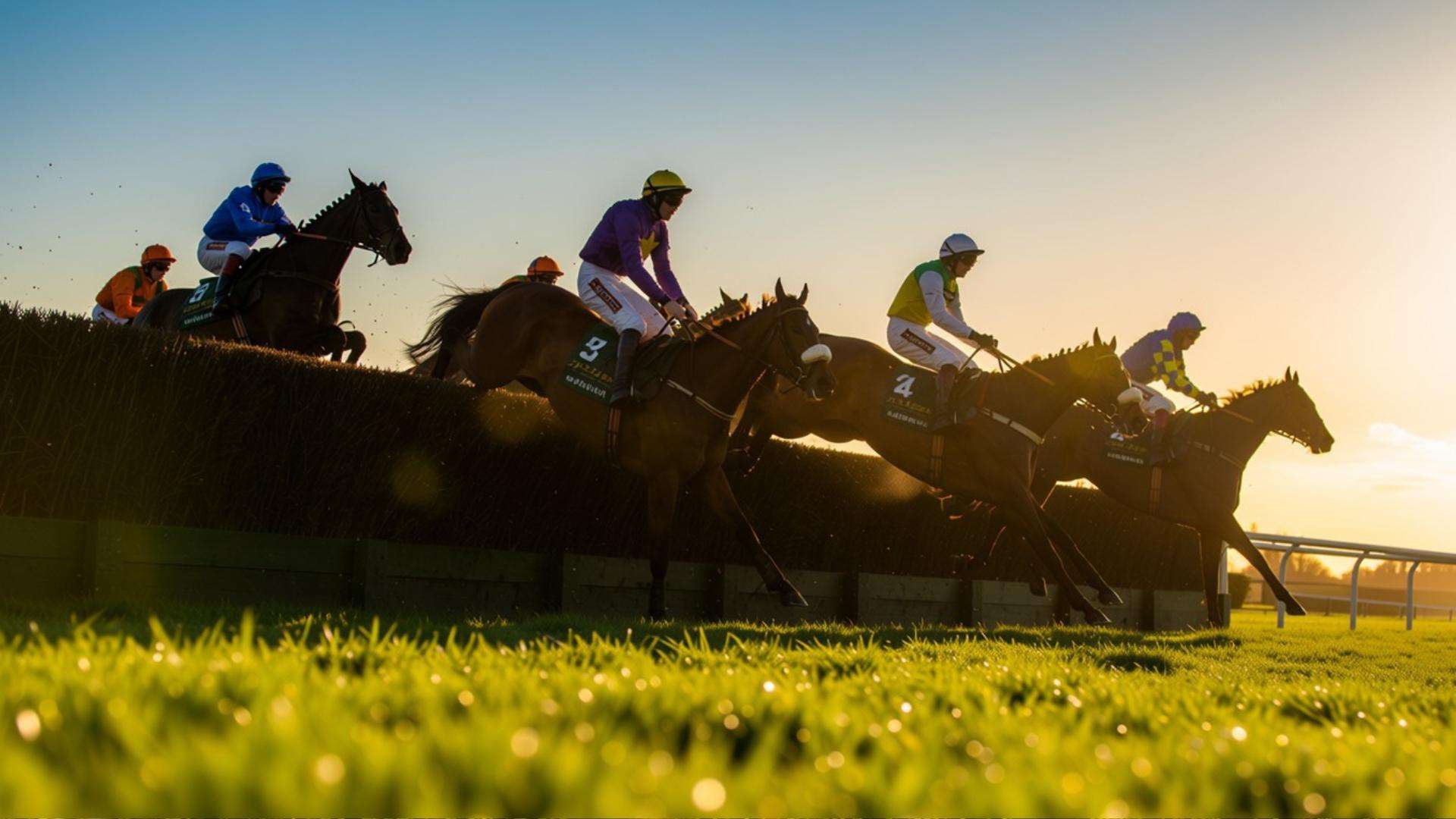
Vulture, trained in Ireland by Tom Dreaper, had been prominent at various stages, while Miss Hunter was also running a big race.
By the time they approached the final two fences, the big question about his stamina had all but disappeared as he moved into the lead before the second-last and immediately began to draw away.
He was already several lengths clear jumping the final fence, and from there, the race became a procession.
Instead of tiring after travelling further than he had ever previously managed in winning company, Gay Trip simply kept going.
By the Elbow the gap was huge, and Taaffe drove him all the way to the line to win by 20 lengths.
Vulture finished second, with Miss Hunter only half a length further back in third. Dozo was fourth. Only seven of the original 28 runners completed the course.
For a horse whose stamina had been one of the main concerns beforehand, it was a remarkable performance.
A Second National for Pat Taaffe
The win gave Taaffe his second Grand National, 15 years after Quare Times, and it just so happened to be his final ride in the race.
Taaffe retired from race riding later in 1970, meaning Gay Trip provided a fitting final Grand National chapter to a career that had included Arkle, four Cheltenham Gold Cups and victories in many of the biggest races in Ireland and Britain.
After retirement, Taaffe became a trainer. He died in 1992 at the age of 62, around a year after undergoing a heart transplant. His son Tom Taaffe later became a successful jockey and trainer himself.
Gay Trip Wasn’t Finished With Aintree

Perhaps the best proof that Gay Trip’s 1970 victory was no one-off came over the following two years.
He returned to defend his title in 1971 but fell at the first fence. However, later that year he showed he still retained plenty of ability by winning his second Mackeson Gold Cup at Cheltenham.
Then, as a ten-year-old in 1972, he returned to Aintree once more, and genuinely, nearly won the National again.
He carried 11st 9lb and finished second to Well To Do, beaten just two lengths while giving the winner 22lb.
In some ways, that run makes his Aintree record even more impressive. Gay Trip was not bred or initially raced as an obvious long-distance chaser, yet he won one National by 20 lengths and came within two lengths of winning another.
The 1970 Grand National ultimately answered every question that had been asked about him. He was a small horse that could handle the fences, carry big weights, and had stamina in bucketloads.


