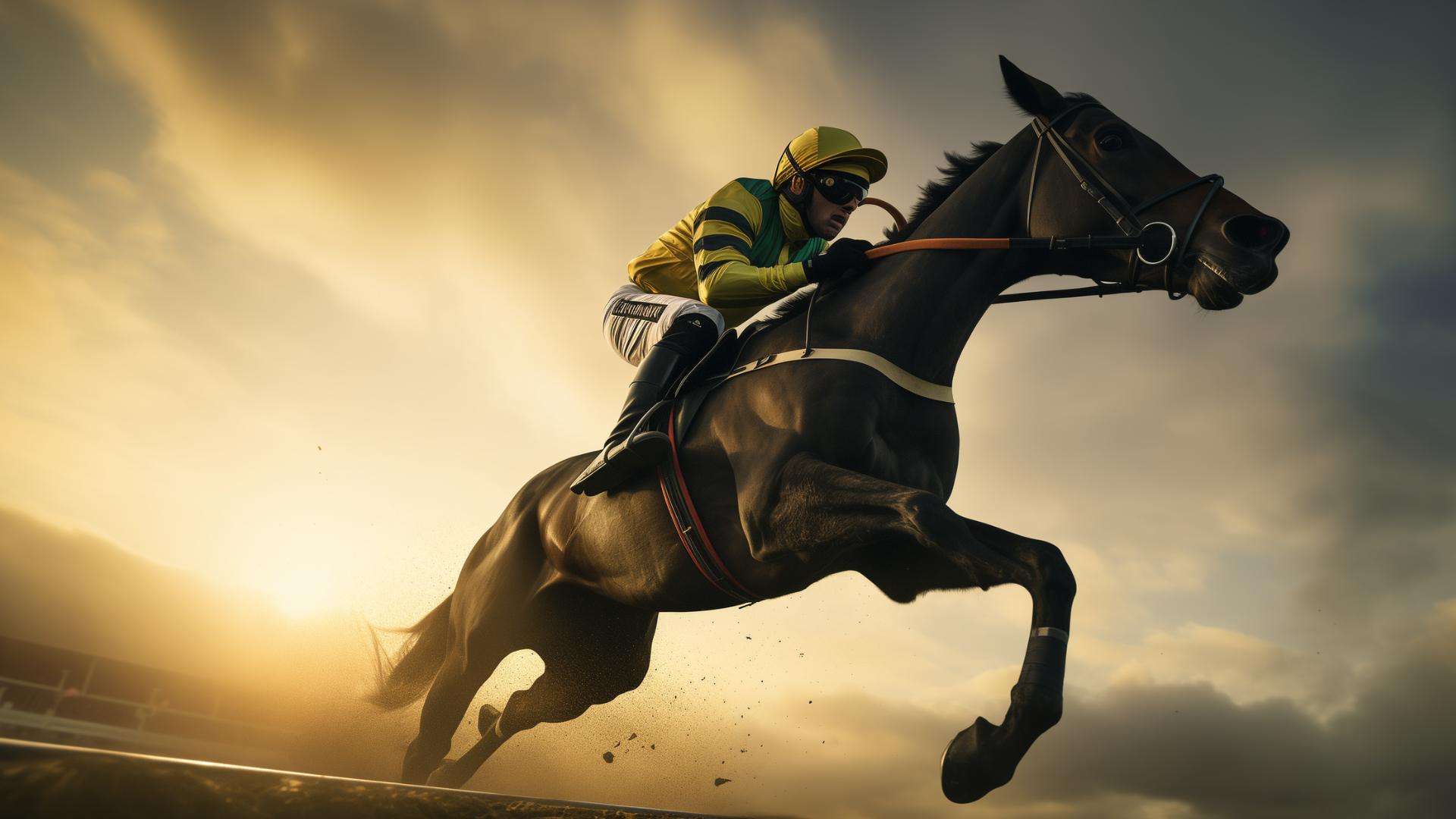
Horse racing has a long memory, and jockeys are often its most vivid characters – light in the saddle, heavy in the storylines.
From Britain to Australia, Japan to New Zealand, a handful of riders have changed not just results, but how the sport is watched, bet on, and even gamified.
What follows isn’t a definitive top‑five, but a tour through riders whose performances left grooves in racing history deep enough that we still follow them today.
Lester Piggott: The Template For Greatness
Lester Piggott’s numbers look like a misprint: 4,493 winners, 30 British Classics, and a record nine Derby victories, all wrapped up in 11 champion jockey titles.
He turned Royal Ascot into something close to a personal fiefdom with 116 winners at the meeting, then casually added a Breeders’ Cup Mile in the United States after coming out of retirement.
His partnership with Nijinsky in 1970, when sweeping the 2,000 Guineas, Derby, and St Leger for the Triple Crown, remains a feat no horse has repeated since, which tells you how hard it is even before you add the pressure of Piggott’s tactical calls in each race.
Piggott changed the way jockeys sat and thought in the saddle, favouring a more forward, crouched style that is still the default in flat racing.
Trainers and fans alike treated his booking as a live market mover, evidence that a top jockey is as much a strategist as a passenger.
Frankie Dettori: From Flying Dismounts To Slots Star

If Piggott was the cool technician, Frankie Dettori became racing’s showman without sacrificing winning.
His “Magnificent Seven” at Ascot in 1996 – seven winners from seven rides – is the kind of thing that makes bookmakers sweat just remembering it, and it cemented his status as one of the sport’s global faces.
Dettori’s Group 1 record spans Arc wins, Classic victories, and major races on multiple continents, riding with a timing that often made a packed finish look almost casual.
That charisma has spilled into racing‑themed casino games, particularly in New Zealand’s online casinos spaces, where global slot catalogues are standard. Frankie Dettori’s Magic Seven and Frankie Dettori: Sporting Legends, both Playtech titles, are fronted by the man himself.
These games sit among the horse‑racing‑themed pokies promoted to New Zealand players, which means Dettori’s face and riding silhouette now turn up not just on race replays but in casino lobbies too.
It is a neat full circle: one outrageous day at Ascot becomes a digital brand that keeps introducing new fans to his legacy, even if some of them arrive via the spin button rather than the betting ring.
Lance O’Sullivan: New Zealand’s Iron Benchmark
For New Zealand racing fans, Lance O’Sullivan is the yardstick by which local jockeys are measured. When he retired in 2003, he had posted a record 2,358 winners at home and another 121 overseas, including big‑race victories in Australia, Hong Kong, Japan, Macau, Singapore and Turkey.
He captured 12 New Zealand Jockeys’ Premierships, breaking Bill Broughton’s long‑standing mark of 11, which is a polite way of saying he dominated the premiership like it was a recurring appointment.
His most famous international success came in the 1989 Japan Cup on Horlicks, where they broke the world record for 2400 metres, a run that signalled how far New Zealand‑trained horses and riders could reach.
Back home, his induction into the inaugural class of the New Zealand Racing Hall of Fame underlined a career that didn’t just win races but dragged local standards higher.
These days, he is better known as a trainer, with Group 1 winners and recent New Zealand Derby successes on his CV, but every time a Kiwi commentator talks about “riding the perfect race,” O’Sullivan’s old footage isn’t far from mind.
George Moore And The Rise of Australian Big-race Cool

Across the Tasman, George Moore became the prototype of the Australian big‑race rider. Beginning his race-riding career in 1939, he went on to rack up 119 Group 1 wins, a tally that still stands as a national record and reads like a guided tour of Australia’s major races.
Ten jockeys’ premierships in Sydney told you he could dominate a season, but it was his ability to deliver on the biggest days that terrified opposition trainers and bookmakers.
Moore’s success spilled well beyond Australia, as he became the first Australian jockey to win the Prix de l’Arc de Triomphe in Europe, giving local riders a template for conquering world racing.
His name was considered so influential that it could shift betting markets on its own, the original “Moore factor” for punters watching the boards.
In an era before social media clips, that kind of reputation was built the hard way: by turning up in big handicaps and weight‑for‑age races and riding like the clock didn’t exist.
Yutaka Take: Japan’s Global Ambassador In The Saddle
Japan’s racing boom has many architects, but Yutaka Take might be the most recognisable. He debuted in 1987 and then spent the next decade hoarding titles, holding the overall champion jockey crown almost continuously through the 1990s.
As of late 2017, he had more than 3,900 wins under Japan Racing Association rules, with over 320 graded stakes successes and around 75 at Grade 1 level, plus at least one Grade 1 win for 23 consecutive years.
Take became the first rider to reach 4,000 winners on the JRA circuit, a milestone marked by fans packing Hanshin just to watch him notch the landmark on Meisho Kazuhime.
He also set records for most wins in a single Japanese season (212) and for prize money earned in a year, underlining that his influence was statistical as well as cultural.
In a country where jockeys can achieve pop‑star status, Take managed to be both icon and workhorse, carrying the sport into the global era while still turning out each week like a man with another race to win.
Linda Jones: Changing Who Gets To Ride

Some performances change the record books; others change the entry list. Linda Jones falls into the second category.
A New Zealander inducted into the national Racing Hall of Fame, she became a trailblazer for women in racing at a time when the sport’s barriers were less like hurdles and more like brick walls.
Her career was defined as much by the races she was finally allowed to ride in as by the ones she won, but her success, once given the chance, made it harder for administrators to keep the door shut.
She was the first woman to be granted a licence to race in New Zealand in 1977 and the first in Australasia to achieve four wins in a single day the following year.
Jones’s influence is visible in the modern depth of female riding talent across the southern hemisphere, where seeing women boot home Group‑race winners is now routine rather than a novelty. Just look at Jamie Melham, who won the Melbourne Cup in 2025.
The Hall of Fame citation names Linda Jones a barrier‑breaker for women in racing, which is polite shorthand for the reality that a lot of current jockeys owe their everyday normality to someone else’s uncomfortable firsts.
Legacy: From Finish Posts To Pixels
Taken together, these jockeys show how influence travels.
From Piggott’s low crouch to Dettori’s slot‑game likeness, from O’Sullivan’s world‑record Japan Cup to Moore’s Group 1 haul, from Take’s statistical avalanche to Jones’s opened doors, their most important rides are frozen on film, but their impact lives on in riding styles, betting markets, and Hall of Fame plaques.
The sport they left behind is faster, more global, more inclusive, and more intertwined with digital entertainment than the one they entered.
Future legends will almost certainly add their own chapters, but they will be doing it on a stage built by these earlier masters of balance, nerve, and timing.
In racing, the horse may get its statue, yet it is often the jockey whose split‑second decisions quietly reshape the game for generations.