
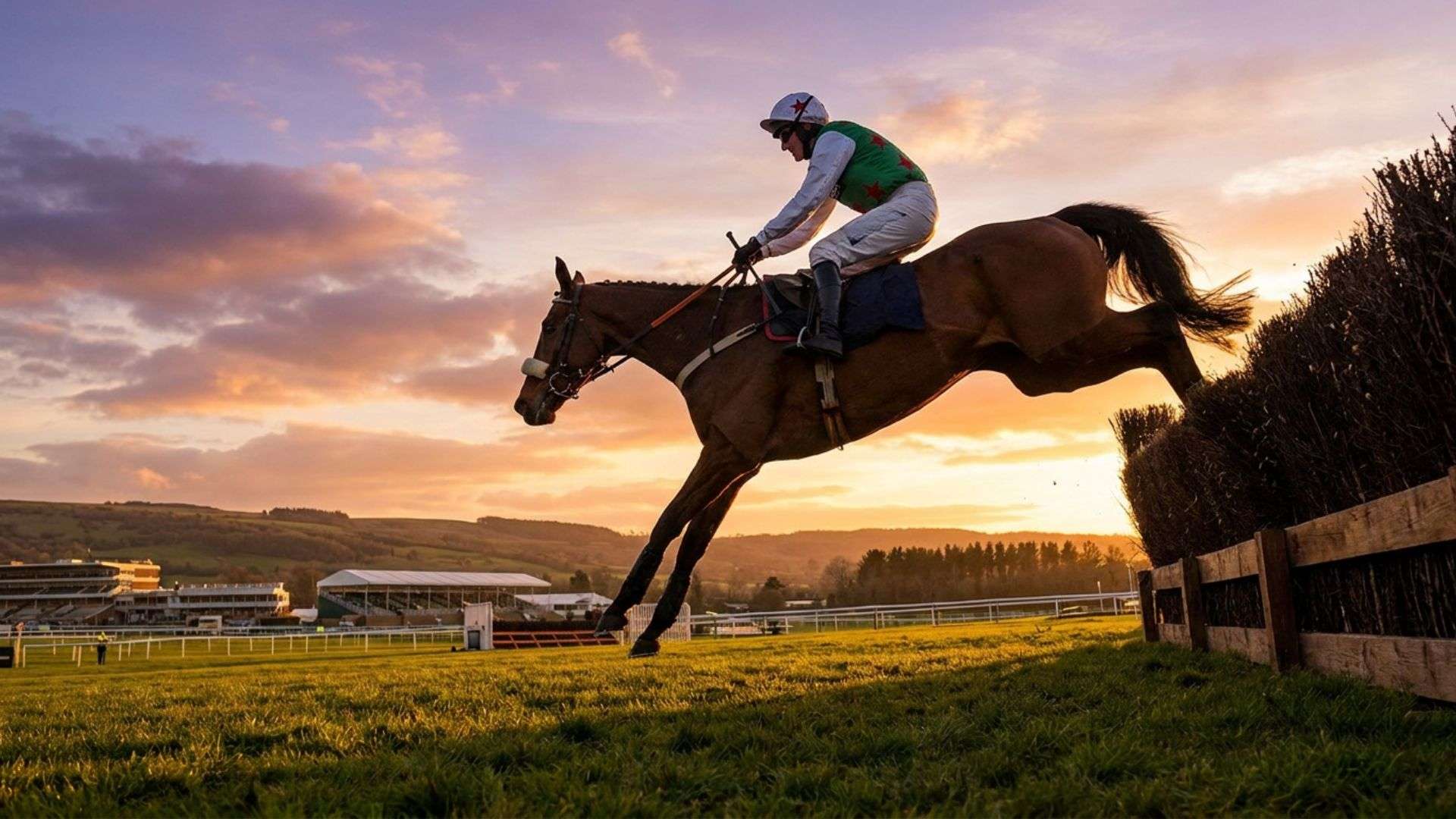

The 156th running of the Grand National on April 5, 2003, delivered one of the most emphatic victories in the race’s modern history when Monty’s Pass stormed home by 12 lengths at Aintree.
The ten-year-old gelding, trained by Jimmy Mangan in County Cork and ridden by Barry Geraghty, completed the four-mile-four-furlong course in 9 minutes 21.7 seconds to claim the £348,000 first prize and complete a legendary betting coup worth over £1 million for his owners.
The Horse and Connections
Monty’s Pass was bred by G. Slattery in Ireland in 1993, sired by Montelimar out of Friars Pass.
The bay gelding began his career in point-to-points before transitioning to chasing, gradually working his way through the ranks under the guidance of trainer Jimmy Mangan at his Conna stables.
The horse was owned by the Dee Racing Syndicate, a five-member group based in Donaghadee, Northern Ireland, led by Blackpool-born bingo hall owner Mike Futter.
Monty’s Pass had shown Grand National potential the previous year when finishing second in the Topham Chase over the famous Aintree fences in 2002.
Following that performance, Mangan confidently told the syndicate to back their horse for the following year’s National, setting in motion one of the most successful gambling coups in racing history.
The owners placed bets at odds as high as 66/1 early in the year, continuing to support their horse as the price shortened.
Pre-Race Build-Up
The 2003 Grand National attracted a maximum field of 40 runners and was officially known as the Martell Grand National after its sponsor. The going conditions were good, which suited Monty’s Pass perfectly.
The horse had been lightly raced over hurdles in the months leading up to the race, specifically to protect his handicap mark, and he carried 10st 7lbs on race day.
Several leading tipsters predicted Monty’s Pass would win, including John Francome in The Sun, Eddie Fremantle in The Observer, Marten Julian in The Sunday Telegraph, and Thunderer in The Times. This backing saw his odds tumble from 40/1 the day before to 16/1 at the off.
The favourite was Shotgun Willy at 7/1, from Paul Nicholls and Ruby Walsh, who had won the Red Square Vodka Gold Cup at Haydock.
Other well-fancied runners included Youlneverwalkalone and Iris Bleu, both at 8/1, Ad Hoc at 9/1, and Chives at 10/1. Racing pundits considered the field one of the strongest Grand National line-ups of the previous two decades.
And if you want to talk about value in the odds, one horse, Empereur River, went off at 250/1 while seven others went off at 200/1. Best placed of those was Tremallt, who finished ninth for trainer Tom George and jockey Jason Maguire.
The 2003 Grand National

Tremallt led the field in the early stages before The Bunny Boiler unseated his rider at the first, and Bramblehill Duke fell at the second fence. The race unfolded dramatically as the field tackled the famous Aintree obstacles, with casualties mounting at every circuit.
Several fancied runners failed to complete the course. JP McManus’s Youlneverwalkalone went lame and was immediately pulled up, never racing again, though he recovered.
Iris Bleu, ridden by champion jockey Tony McCoy, made repeated mistakes and was pulled up lame before the water jump. Shotgun Willy, the favourite, pulled up on the second circuit after tailing off. Ad Hoc’s rider, Paul Carberry, was unseated at the 19th fence.
As the race progressed onto the second circuit, Monty’s Pass joined Gunner Welburn and Torduff Express at the head of affairs. Barry Geraghty positioned his mount perfectly, and the gelding jumped with feline precision throughout.
By the time they crossed Melling Road for the final time, a group of four horses had pulled clear: Monty’s Pass, Gunner Welburn, Amberleigh House, and Montifault, with Supreme Glory chasing behind.
Monty’s Pass powered clear over the final two fences and stayed on strongly up the run-in to win by 12 lengths from the 40/1 shot Supreme Glory, ridden by Leighton Aspell.
Amberleigh House, who would go on to win the race himself the following year, finished third under Graham Lee, a further two lengths back. Of the 40 starters, only 14 completed the course.
The Big Payout

The victory triggered one of the biggest payouts in Grand National history. Mike Futter estimated his personal winnings at over £800,000, while the Dee Racing Syndicate collectively won more than £1 million.
William Hill reported paying out £400,000 on just two winning bets, claiming it was their worst Grand National result ever.
In post-race interviews, Barry Geraghty was effusive about his mount’s performance, saying, “I couldn’t believe how easily he did it, he jumped like a cat all the way, it was fantastic”.
Trainer Jimmy Mangan, realising a lifelong dream, said “It’s a thing you dream about. To have a winner is unreal”.
Tragically, Goguenard was euthanised after becoming caught in a melee at the 19th fence. Four jockeys required hospital treatment: Gerry Supple suffered a broken leg, Alan Dempsey a broken wrist, Brian Crowley a broken collarbone, and Timmy Murphy sustained a concussion and a broken nose.
Monty’s Pass Legacy
Monty’s Pass returned to defend his crown in 2004, finishing a creditable fourth. He ran once more in 2005, completing the course in 16th place before being retired to Mangan’s yard in Conna.
The gelding enjoyed a long retirement, becoming the oldest living Grand National winner before passing away in November 2022 at age 29.
The 2003 Grand National remains one of the most memorable renewals, combining a dominant performance with one of racing’s most successful betting coups and showcasing the enduring appeal of steeplechasing’s greatest test.

