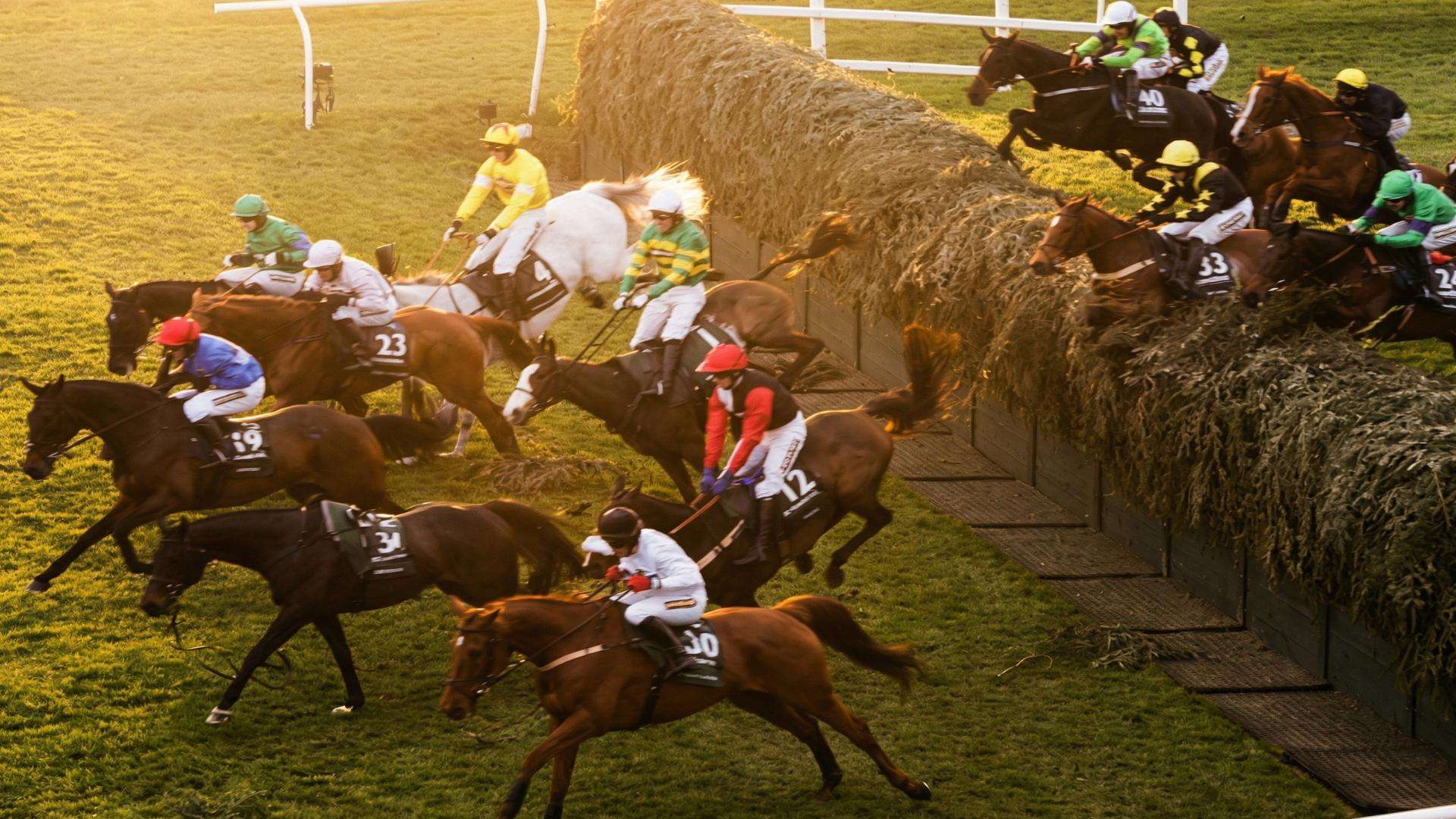
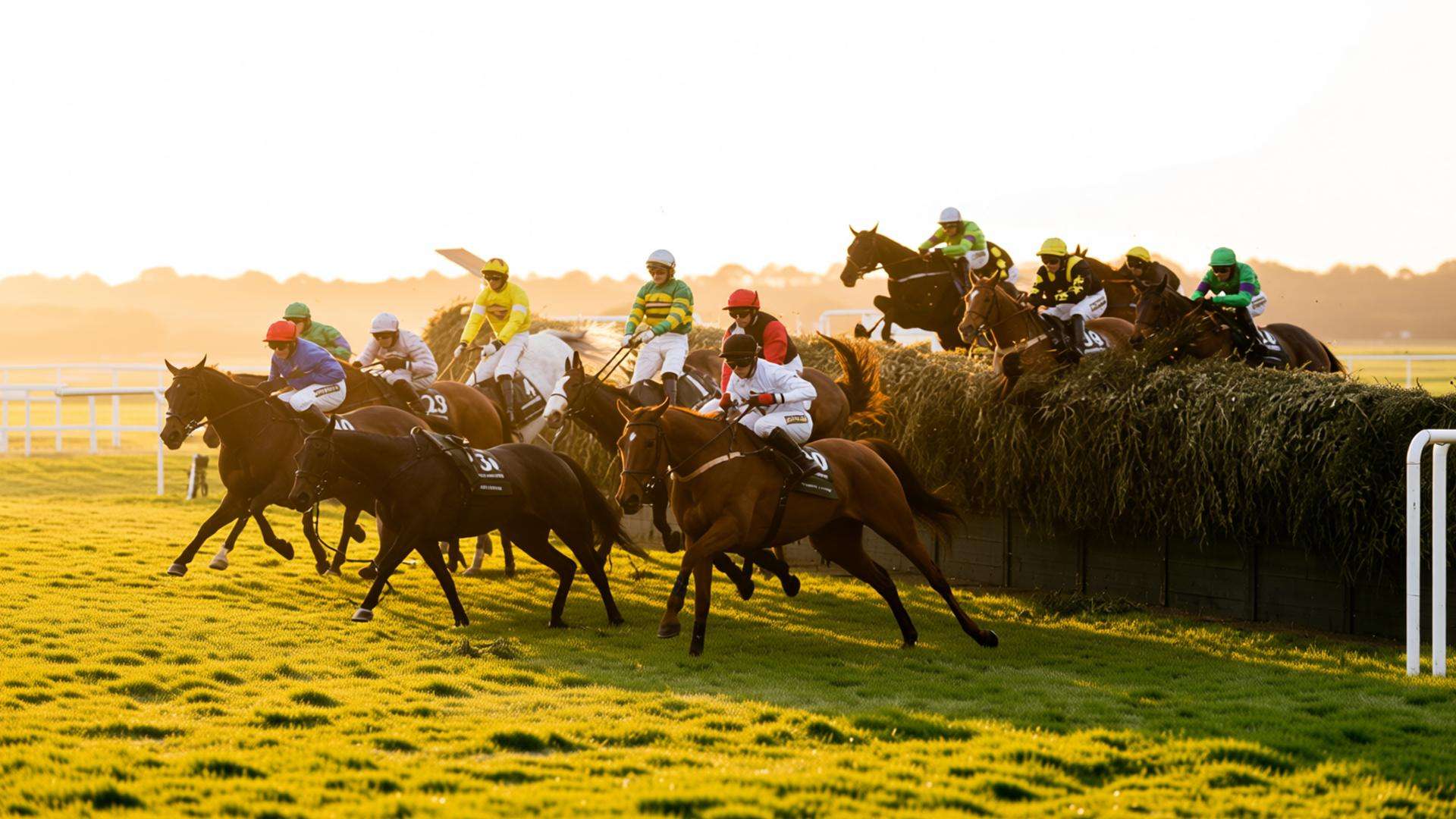
One of the great things about the Grand National is the number of unusually named horses that run in the race.
For some reason, the race attracts runners with names that resonate with the general public, to the extent that some people will back a horse based only on its name, despite any chance it may have of actually winning the race.
One such horse was Ben Nevis, named after the highest mountain in the UK. Anybody with even a hint of national pride or, indeed, a connection to Scotland would have felt instinctively drawn to the runner before the race.
Ironically, both his jockey and owner were American!
So just how did Ben Nevis reach the peak of his mountain with a view of the 1980 Grand National winner’s enclosure?
Let’s find out…
Moving Stateside
The story behind Ben Nevis is an interesting one. Sired by Casmiri and foaled out of the dam Ben Trumiss in 1968 he started his career as a point-to-point but without much success.
He fell in his first two races and won his third, catching the eye of American Redmond C. Stewart Jnr., who had no chasing experience whatsoever but agreed to buy him at a dinner party.
At that point, he was shipped from the UK to America, a move that proved incredibly savvy because there he was practically unbeatable.
That was in 1974, and Mr Stewart, having twice owned a winner of the Maryland Hunt Cup, knew he was onto a good thing.
He was proved right when Ben Nevis went on to win the Maryland Cup in both 1977 and 1978, and in total won twelve successive races before he was sent back to England to enter the 1979 Grand National.
On returning to England to trainer Captain Tim Forster, Ben Nevis became the polar opposite of his American self, competing in twelve races without a single win.
These defeats were accredited to the fact that having won seven of his twelve races in America over timber; he was now completely unused to the heavy or soft ground in England.
Despite this, for the 1979 race, he was fourth in the betting at 14-1 largely because the good going was in his favour.
However, bad luck ruled his race, with two riderless horses creating a pile-up at The Chair – his jockey, Mr Fenwick, got back in the saddle but abandoned hope at fence 16 and was out of the National.
Race To Victory in 1980
The 1980 National (sponsored by The Sun) didn’t look at all promising for Ben Nevis. He was now twelve years old, had been lowered only four pounds and still hadn’t won a single race in England.
He also had a cough, and it was to be extremely heavy going. In fact, the race was held in abysmal conditions. The course was like a bog, and Ben Nevis didn’t look like he had much hope.
Not only had he run poorly the year before, but he hadn’t won a single race after a dozen attempts in Britain. It was no wonder he went on odds of 40/1.
Even his trainer had doubts, later stating that he didn’t think they had a hope and would have withdrawn had it not been for his supporters who had travelled from America for the race.
His advice to Mr Fenwick, the jockey on board: ‘Keep remounting’.
A few of the fences caused problems for the rest of the field, with the Chair on the circuit responsible for the downfall of Rubstic, a race favourite.
Even by the time they crossed the Melling Road for the second time, Ben Nevis still wasn’t really in it, though he had managed to stay in touch with the leaders, sitting in fourth or fifth position.
A couple of fences later, it was a different story as Ben Nevis stealthy made his way to the front, jumping into second place at the 19th fence.
By the time they reached Bechers on the second circuit, the leader was gone, leaving Ben Nevis free and clear up front.
As the rest of the race progressed the remaining field dwindled until only four were left still in contention.
Ben Nevis won by a comfortable twenty lengths to Rough and Tumble and a further ten lengths to The Pilgarlic, with only one other horse, Royal Stuart, completing the course out of the thirty starters.
After The Victory
In winning the 1980 Grand National, Ben Nevis became only the third American-owned jumps racehorse to taste victory in the iconic Aintree race.
After his victory, he returned to the United States, where he retired to Mr Stewart’s Maryland estate.
Following Mr Stewart’s death, he was cared for by Mr Fenwick, the second American jockey to win the Grand National.
Ben Nevis died of colic in early 1995 at the age of 27 and was buried alongside the 13th fence at the Grand National course in Butler, Maryland.
Nearly 30 years after that fateful win in Liverpool, in 2009 Ben Nevis was inducted into the National Museum of Racing and Hall of Fame.